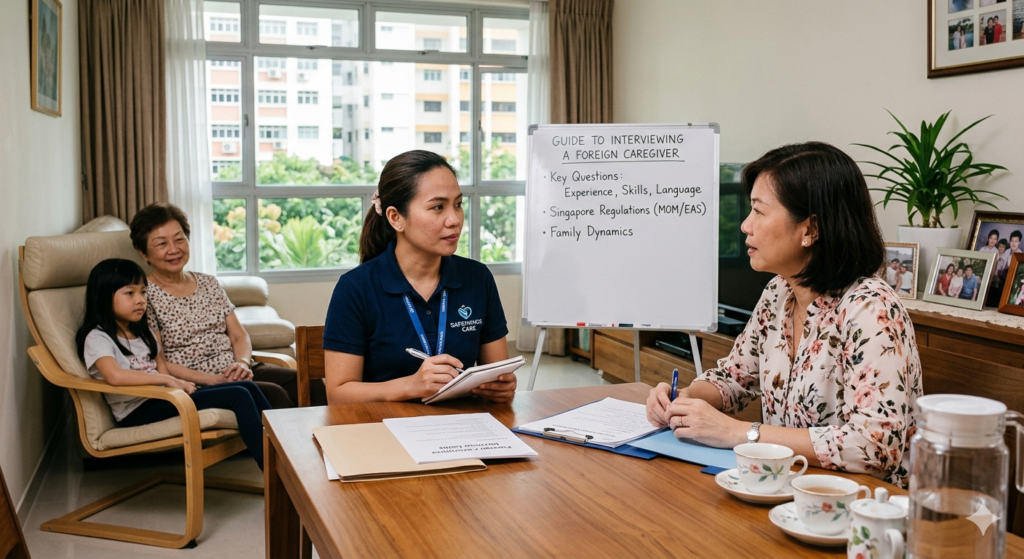
The Ultimate Guide to Interviewing a Foreign Caregiver in Singapore
Hiring a foreign caregiver for an elderly or bedridden loved one is a deeply personal decision. While a candidate’s resume tells you about their employment history and training certifications, the live interview is where you uncover their genuine attitude, patience, and suitability for your home.
Conducting a structured interview helps ensure your family selects a caregiver who is both technically capable and emotionally prepared for the role. Here is a step-by-step guide on how to interview a caregiver effectively.
1. Start with Warmth to Ease Tension
Interviewing over a video call or in person can make candidates nervous. Begin the conversation by introducing yourself and creating a welcoming atmosphere. This helps the caregiver relax, allowing their true personality to shine through.
- What to say: “Thank you for taking the time to speak with us today. We want to use this time to get to know you better and share a bit about our family’s needs.”
2. Evaluate Core Technical Competencies
Depending on your loved one’s medical condition, the caregiver may need specific technical skills. Avoid asking simple “yes or no” questions. Instead, ask situational questions to gauge their actual experience.
- Key Interview Questions:
- “Can you walk me through your experience with bedridden patients? How do you safely transfer them from a bed to a wheelchair?”
- “Have you handled specific medical routines before, such as nasogastric tube (NG tube) feeding, changing urinary bags, or managing strict medication timelines?”
- “What steps do you take to maintain proper hygiene and prevent bedsores for a patient who cannot move on their own?”
3. Gauge Emotional Resilience and Patience
Caregiving is a demanding profession that requires immense emotional stamina, especially when dealing with patients suffering from dementia or chronic pain. It is vital to assess how a candidate handles stress.
- Key Interview Questions:
- “Elderly patients can sometimes become frustrated, stubborn, or refuse to eat. How do you respond when a patient is having a difficult day?”
- “Describe a stressful situation you faced with a previous patient. How did you handle it, and what did you learn?”
- “How do you keep yourself patient and calm when a patient asks the same question repeatedly or wakes up multiple times during the night?”
4. Test Communication and Cultural Alignment
Clear communication is essential for medical safety and daily harmony. Use the interview to observe how well the candidate understands your instructions and how clearly they express themselves.
- Key Interview Questions:
- “If you notice a sudden change in the patient’s condition—like a low-grade fever or a refusal to take medicine—what is the first thing you would do?”
- “Are you comfortable preparing meals according to our family’s dietary preferences or specific nutritional guidelines from the doctor?”
5. Outline Clear Expectations Before Closing
A successful placement relies heavily on managing expectations early. Before concluding the interview, clearly outline the daily realities of the role, including:
- The exact daily routine of the patient.
- Night duty requirements (if any).
- Rest day arrangements and phone usage boundaries.
Ask the candidate directly if they are comfortable with these conditions, and invite them to ask any questions they might have about your family.
Summary Checklist for Employers
| Interview Focus | What to Look For |
| Technical Skill | Confident explanation of transfer techniques, hygiene care, and medical routines. |
| Temperament | A gentle tone of voice, empathy, and demonstrated patience under stress. |
| Communication | Ability to understand instructions clearly and report emergencies effectively. |
By taking a structured, empathetic approach to the interview process, you can confidently select a caregiver who will provide excellent care and bring peace of mind to your entire household.